A clear plastic bag and a food-grade plastic bag can look identical and cost about the same, yet only one of them is legal to put against a sandwich, a loaf of bread, or a tray of cookies. The moment a poly bag makes direct contact with food, it becomes a regulated food-contact article, and “it’s just plastic” is not a defense a health inspector accepts. If you package anything edible, here is what food-grade actually requires and what to put on the order so you can prove it.
What “food grade” means in the regulation
In the United States, the governing rule for polyethylene food-contact film is 21 CFR 177.1520, the FDA regulation covering olefin polymers used with food. It defines the approved resin composition, caps the additives a compliant film may contain, and sets the conditions of use the material is cleared for, from freezer temperatures up to boiling-water contact depending on the resin. A bag qualifies not because a label says “food safe” but because the resin and everything blended into it fall within that regulation.
Low-density polyethylene, the workhorse resin for flexible bags, earns food-grade status largely through what it does not contain. Compliant LDPE carries no plasticizers, no phthalates, and no meaningful quantity of extractable additives; its flexibility comes from the branched structure of the polymer itself rather than from softeners that could migrate into food. Natural and white grades generally comply on their own. Add a color, and the burden shifts: a black or tinted bag is only food grade if the colorant, carbon black included, is itself cleared for food contact.
Virgin resin, recycled content, and why the difference matters
For anything touching food directly, virgin resin is the default and the safe answer. Recycled content is where buyers get into trouble. Post-consumer recycled plastic can carry residual substances from its previous life, so using it in direct food contact generally requires that the specific recycling process has been reviewed by the FDA and received a letter of non-objection. That is a property of the recycler’s process, not something a bag converter can assert casually. If sustainability goals are pushing you toward recycled material, keep the recycled layer or the recycled bag on the outer, non-food side of the package and reserve virgin, compliant film for the surface that meets the product.
This is also why “food grade” and “recyclable” are separate questions that people constantly conflate. A bag can be fully compliant for food contact and still be hard to recycle, or be made partly of recycled resin and not be cleared for direct contact. Specify each requirement on its own rather than assuming one implies the other.
Temperature is the spec that quietly disqualifies bags
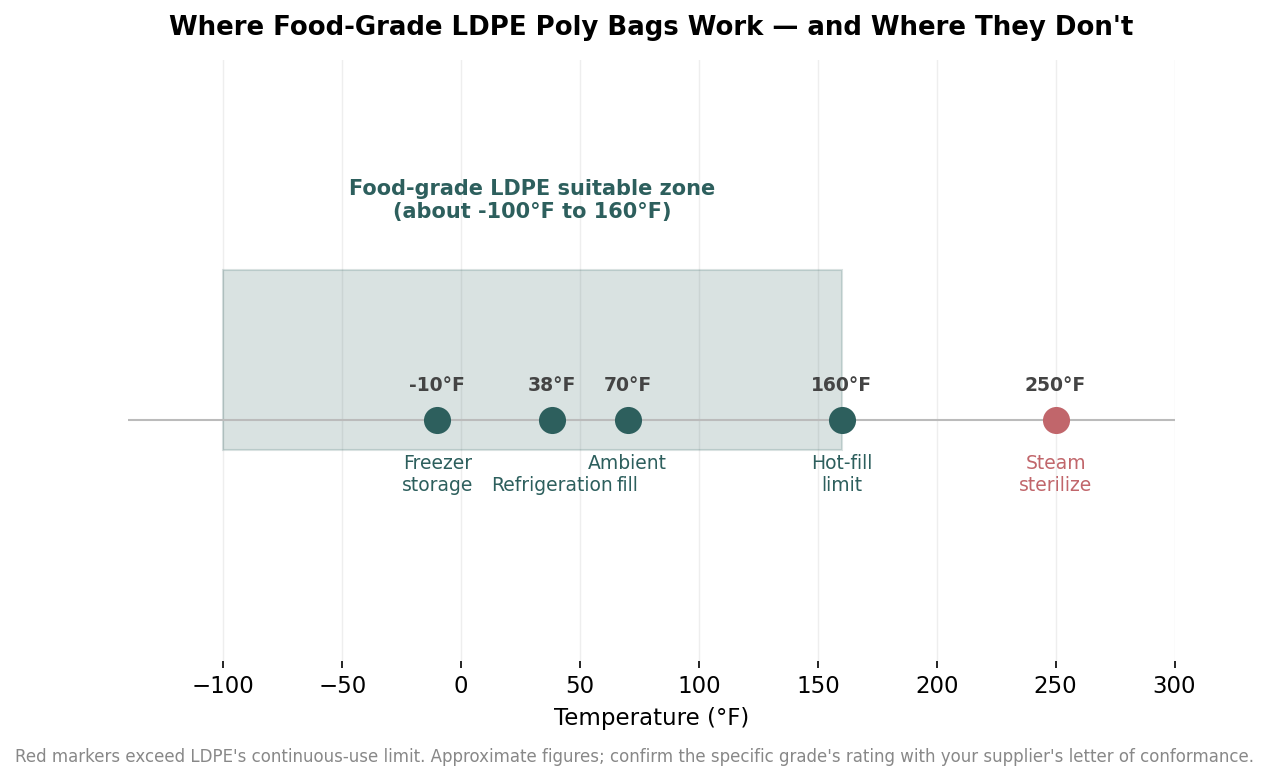
The most common food-grade failure is not chemical, it is thermal. Food-grade LDPE has a continuous-use ceiling around 160°F and stays serviceable in a freezer down to roughly -100°F, which comfortably covers refrigeration, frozen storage, and ambient-temperature packing. What it does not cover is heat. A hot-fill process near or above 160°F, a steam or boiling sterilization step, or a bag a customer might microwave will push LDPE past its limit, where it can distort, seal poorly, or lose the integrity the compliance letter assumed.
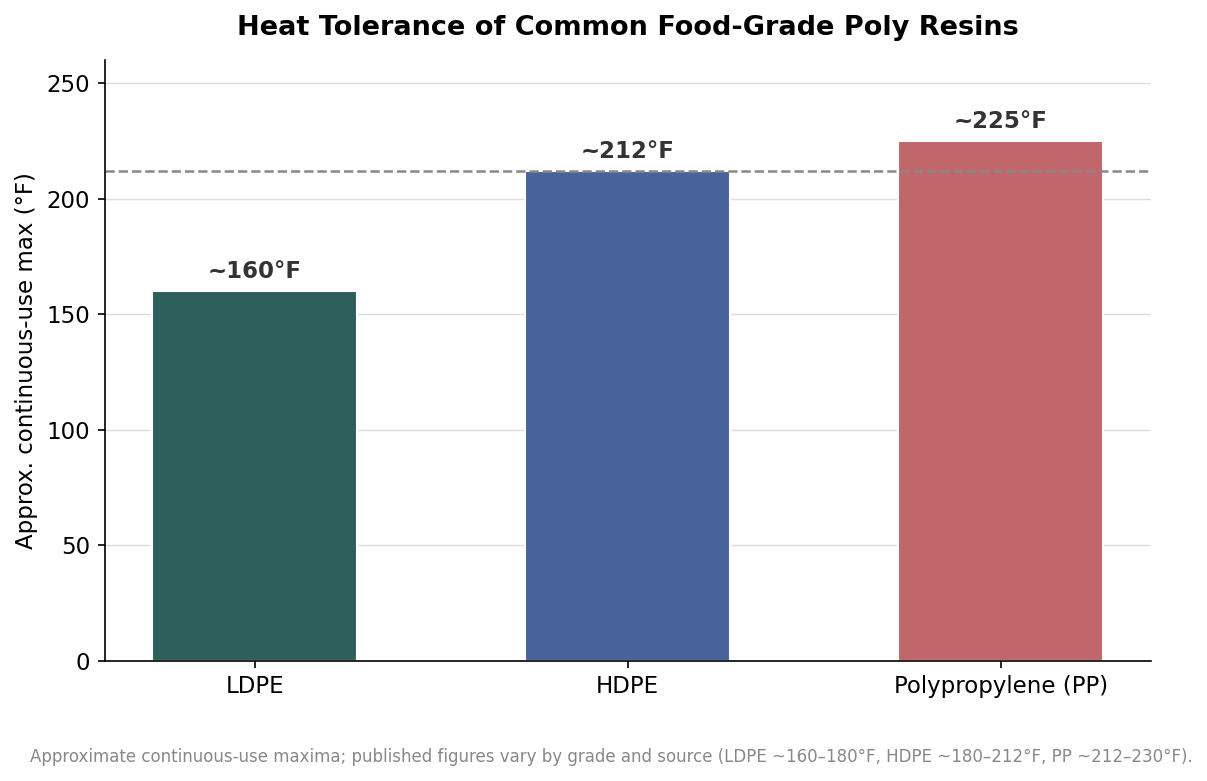
When the application runs hot, the answer is a different resin, not a thicker LDPE bag. High-density polyethylene tolerates roughly boiling-water temperatures, and polypropylene handles more still, which is why boil-in-bag and higher-heat food packaging leans on those materials. Match the resin to the hottest and coldest point the bag will actually see in your process and in your customer’s kitchen, then confirm that exact grade is rated for it.
The paperwork that proves compliance
Compliance you cannot document is compliance you cannot defend. Before you approve a print run, ask the supplier for a letter of guaranty or conformance stating that the film meets 21 CFR 177.1520, on their letterhead and tied to the material you are actually buying. Add a material or grade certificate confirming the resin and density, and lot traceability that links a heat or lot number back to that conformance statement, so a specific box of bags can be traced if a question ever arises. If your product touches potable water or falls under a specific program, request the relevant listing number rather than assuming a general food-grade letter covers it. Reputable converters produce these documents as a matter of routine; hesitation is a signal worth heeding.
Printing without breaking food-grade status
A custom-printed food bag adds one more variable: the ink. Inks and coatings are subject to the same migration logic as the resin, so the standard practice is to keep printing on the outer surface of the bag, away from the food, or to use inks formulated as low-migration for food packaging. Surface printing on the exterior sidesteps most direct-contact concerns; reverse or interior printing needs inks specifically cleared for that use. When you send artwork, tell the converter the bag is for food contact so they select the right ink system rather than a general-purpose one, and ask that the food-contact statement account for the printed film, not just the base resin.
None of this makes food-grade bags exotic or expensive. It makes them specified. Name the resin, state the temperature range, insist on virgin material for direct contact, confirm any colorant and ink are food-cleared, and collect the conformance paperwork before production. Do that once, save the specification, and every reorder carries the same defensible compliance without you having to relitigate it.
Leave a Reply